Last updated on July 7th, 2026 at 01:43 am
Disclosure: This post contains affiliate links, and we may earn a commission on purchases made through these links at no extra cost to you. As an Amazon Associate, we earn from qualifying purchases.
Quick Answer: Potty training a Golden Retriever puppy comes down to three pillars: a consistent schedule, positive reinforcement, and close attention to your puppy’s cues. Establish a routine of frequent bathroom breaks based on age, reward every outdoor success with treats and praise, and watch for signs like circling or sniffing. Expect occasional accidents and handle them calmly—never punish. Most Golden Retrievers grasp house training within 4–6 months with dedicated effort.
Introduction to Potty Training
Potty training is one of the first significant tasks you’ll undertake with your Golden Retriever puppy. It’s a process that requires your dedication and an understanding of your puppy’s behavior. The key lies in being patient as your puppy learns where and when it’s appropriate to relieve themselves.
Golden Retrievers are intelligent and eager to please, which typically makes them easier to train compared to many other breeds. However, it’s important to remember that accidents will happen! Your gentle guidance is crucial during these early days. The stronger your bond with your puppy, the more smoothly the training process will go. If you’re looking for a broader overview of raising a Golden, check out our complete Golden Retriever puppy care guide.
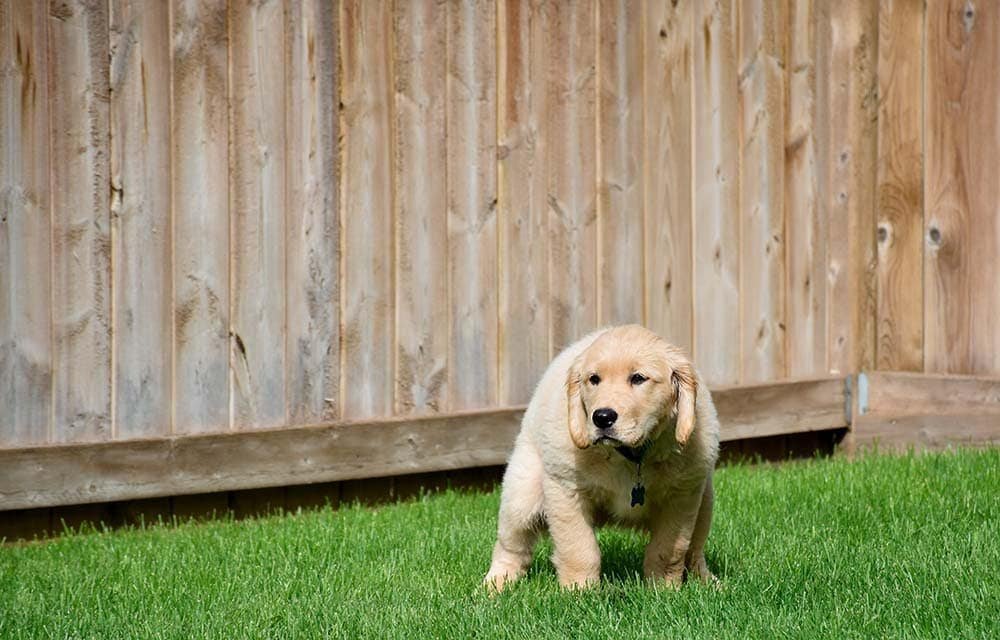
This image is property of www.dogster.com.
Common Signs
Recognizing when your puppy needs to go outside is vital in your training efforts. Golden Retrievers are fairly communicative dogs, and they will give you clear signals if you pay attention. Here are some common signs that indicate your Golden Retriever may need to relieve themselves:
- Fidgeting: If you notice your puppy unable to sit still or pacing, it’s a signal that they need to go out. A normally calm puppy that suddenly becomes restless is usually telling you something.
- Circling: Watch for circling behavior as it often indicates that your puppy is preparing to do their business. This is one of the most reliable signs across all dog breeds.
- Sniffing: When your puppy starts to sniff around the floor more intently than usual, it’s a strong indication that they are looking for a spot to relieve themselves. This is an instinctive behavior.
- Whining or Barking: Some Golden Retrievers will vocalize when they need to go out. If your puppy approaches the door or stands by it while whining, do not ignore them.
- Sudden Disappearance: If your puppy was playing happily and suddenly wanders off to a corner or behind furniture, follow them immediately. They may be looking for a private spot to go.
Being attentive to these behaviors will help you respond promptly, reinforcing the training process. The faster you react to these signals, the quicker your puppy will learn that communicating their needs leads to a positive outcome.

This image is property of www.dogster.com.
Setting Up a Schedule
Consistency is the single most important factor in successful potty training. Puppies thrive on routine because it helps them feel secure and teaches them what to expect. A well-planned schedule takes the guesswork out of training for both you and your puppy.
Start by designating a specific outdoor bathroom spot and always take your puppy there first. The scent of previous eliminations will help trigger the behavior. Use the same door every time to build a consistent pathway in your puppy’s mind. For more on building routines and habits with your Golden, read our essential Golden Retriever training tips.
Always take your puppy out at these key times:
- Immediately after waking up (both mornings and naps)
- Within 15–20 minutes after meals
- Right after vigorous play sessions
- Before bedtime
- Every hour during active waking hours for young puppies
Frequency of Potty Breaks
Puppies generally have small bladders and need more frequent potty breaks than adult dogs. A Golden Retriever puppy’s bladder muscles develop gradually, so you cannot rush this process. Here are some guidelines for managing your puppy’s bathroom schedule:
| Age of Puppy | Recommended Time Between Breaks | Max Hold Time (Ideal) |
|---|---|---|
| 2 months | Every 1 hour | 2 hours |
| 3 months | Every 1.5 hours | 3 hours |
| 4 months | Every 2 hours | 4 hours |
| 5 months | Every 2.5 hours | 5 hours |
| 6 months | Every 3 hours | 6 hours |
In addition to these general guidelines, always take your puppy outside after meals, playtime, and right before bedtime. Establishing a consistent routine will help your puppy learn to associate outdoor time with bathroom needs. Remember that these are general guidelines; individual puppies may vary slightly, so adjust based on your experience.
Age-based Schedule
The bladder control of a puppy develops as they grow. As a rule of thumb, young puppies can hold their bladder for approximately one hour per month of their age. For instance, a 3-month-old puppy can generally hold it for about three hours. This understanding will assist you in scheduling regular potty breaks and reducing accidents inside.
Keep in mind that this rule applies when your puppy is at rest or sleeping. During active play or excitement, your puppy may need to go out much more frequently. Excitement and movement stimulate the digestive system, so a puppy that is running and playing may need a break in as little as 20–30 minutes.
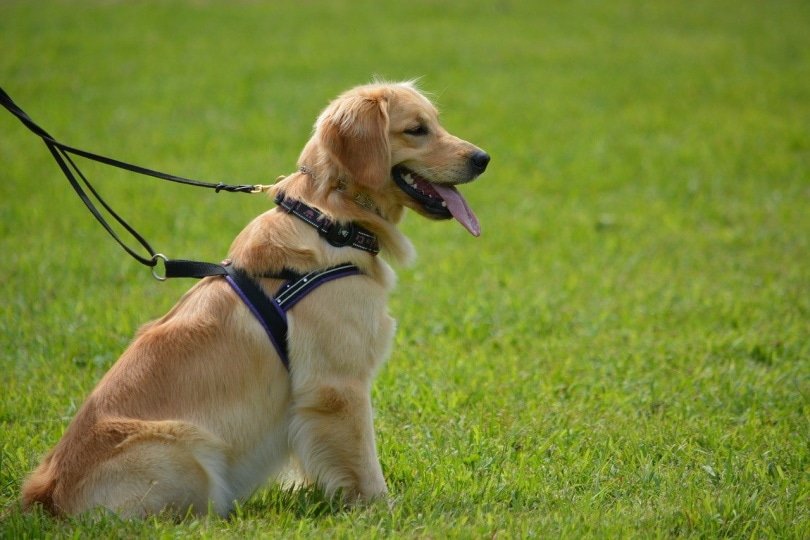
This image is property of www.dogster.com.
Crate Training for Potty Success
Crate training is one of the most effective tools you can use alongside potty training. Dogs are naturally den animals and instinctively avoid soiling their sleeping area. A properly sized crate leverages this instinct to help your puppy learn bladder control.
Choose a crate that is just large enough for your puppy to stand up, turn around, and lie down comfortably. If the crate is too large, your puppy may designate one corner as a bathroom area. Our crate training guide for Golden Retrievers covers crate sizing, setup, and the introduction process in detail.
Introduce the crate gradually with positive associations. Toss treats inside, feed meals in the crate with the door open, and never use the crate as punishment. A Golden Retriever that views their crate as a safe, comfortable space will be far more willing to hold their bladder while inside.
Potty Training Steps
Here’s a step-by-step guide to help you through the potty training process:
Take Your Puppy to a Designated Bathroom Spot: Choose a specific spot in your yard or outside that will be the designated area for potty. Consistency is key; taking your puppy back to the same area will help them understand it’s where they should relieve themselves. The scent from previous visits will act as a natural trigger.
Allow Sniffing and Exploration: Give your puppy a moment to sniff and explore the area. This natural behavior is part of their instinct to find a suitable place to go. Do not rush this step; let them take their time.
Use Verbal Cues: When your puppy begins to relieve themselves, use a consistent verbal cue like “go potty.” Over time, they will learn to associate that phrase with the act. Choose a short, simple phrase that everyone in your household will use consistently.
Reward with Treats and Praise: Once your puppy finishes, immediately reward them with a treat and plenty of enthusiastic praise. Positive reinforcement will encourage them to repeat the behavior. Golden Retrievers are highly food-motivated, making treats especially effective.
Spend Time Outside After Potty Breaks: Once your puppy’s bathroom business is done, spend some extra time outside playing or exploring. This helps create positive associations with being outside, making them more likely to want to go out for potty breaks in the future. If every trip outside ends immediately after potty, your puppy may learn to delay elimination to extend their outdoor time.
Training Tips
Handling accidents with care and implementing some useful strategies can make the potty training experience smoother. Here are some essential tips that experienced Golden Retriever owners swear by:
Avoid Punishment for Accidents Indoors: If an accident happens, do not scold your puppy. Punishment can lead to anxiety about going potty in your presence, which may cause them to hide and eliminate in places you cannot see. Instead, calmly clean up the mess using an enzymatic cleaner to remove all traces of odor, and focus on reinforcing positive behavior outside.
Stick to a Consistent Feeding Schedule: Feeding your puppy at the same times every day helps regulate their bathroom needs. As they associate mealtime with potty time, they will develop a better routine. Avoid free-feeding (leaving food out all day) during potty training, as it makes elimination timing unpredictable.
Remove Water Before Bedtime: To minimize nighttime accidents, consider pulling up your puppy’s water a couple of hours before bedtime. However, ensure they stay well hydrated during the day. The rule of thumb is to offer water regularly throughout the day and remove the bowl about 1.5–2 hours before your puppy’s last potty break of the night.
Supervise Constantly: Keep your puppy within eyesight at all times during the training period. Use a leash attached to your waist (sometimes called umbilical cord training) to keep them close. This prevents them from wandering off to have an accident unnoticed.
Use a Bell at the Door: Many Golden Retriever owners find success with a bell hanging from the doorknob. Teach your puppy to ring the bell with their nose or paw before going outside. This gives them a clear, consistent way to communicate their needs to you.
This image is property of www.dogster.com.
Troubleshooting Common Challenges
Even with the best plan, you will encounter bumps along the road. Here are some common potty training challenges specific to Golden Retrievers and how to address them:
Setbacks After Change: Golden Retrievers are sensitive to changes in routine. A move, a new family member, or even rearranged furniture can cause regression. If your previously trained puppy starts having accidents, go back to basics: increase the frequency of breaks, supervise more closely, and reinforce heavily for outdoor success.
Submissive Urination: Some Golden Retriever puppies, especially shy ones, may dribble urine when excited or nervous. This usually resolves with confidence building and maturity. Never punish this behavior, as it will only make it worse.
Accidents in the Crate: If your puppy is soiling their crate, the crate may be too large, or you may be leaving them inside for too long. Double-check the crate size and your schedule. If the problem persists, consult your veterinarian to rule out a urinary tract infection.
For more help with specific training challenges, browse our Golden Retriever behavior guide.
Nighttime Potty Training Strategy
Nighttime potty training requires a slightly different approach because your puppy needs to learn to sleep through the night without needing a break. For the first few weeks, set an alarm to take your puppy out once during the night. A 2-month-old puppy typically cannot make it through an entire night without a bathroom break.
Keep nighttime potty breaks as boring as possible. Carry your puppy to the designated spot, use your verbal cue, reward calmly if they eliminate, and immediately return them to the crate. No playtime, no extra attention. This teaches your puppy that nighttime is for sleeping, not for fun.
As your puppy grows, you can gradually extend the overnight period. By 4–5 months of age, most Golden Retrievers can sleep through the night without a break. Feed dinner earlier in the evening and remove water well before bedtime to help this process along.
Encouragement and Patience
Patience, love, and consistency will be your best friends throughout this training process. Every puppy learns at their own pace, and while some may pick up on potty training quickly, others may take a little longer. It’s important to remain encouraging, as your puppy is relying on you to teach them.
Celebrate the small victories, and remember that accidents are part of the learning process. Keep a log of successes to track progress and motivate yourself on difficult days. With time, your Golden Retriever will become a potty-trained companion you can be proud of. The bond you build through this process will serve as the foundation for a lifetime of good behavior.
Professional Help
If you find that despite your best efforts the process is not going smoothly, it’s perfectly okay to seek help. Consider consulting a professional dog trainer or a behaviorist who specializes in puppy training. They can offer tailored strategies and tips to address any specific challenges you’re facing, such as persistent accidents, fear of going outside, or difficulty with crate training.
Some signs that it may be time to seek professional help include: continued accidents past 6 months of age, your puppy showing fear or anxiety about going outside, or if you feel consistently frustrated with the process. A fresh perspective from a professional can make all the difference.
In closing, while potty training your Golden Retriever requires commitment, understanding your puppy’s needs and behavior makes all the difference. Stick with it, stay patient, and soon enough, you will both enjoy the perks of a successfully potty-trained puppy. Your journey together is just beginning!
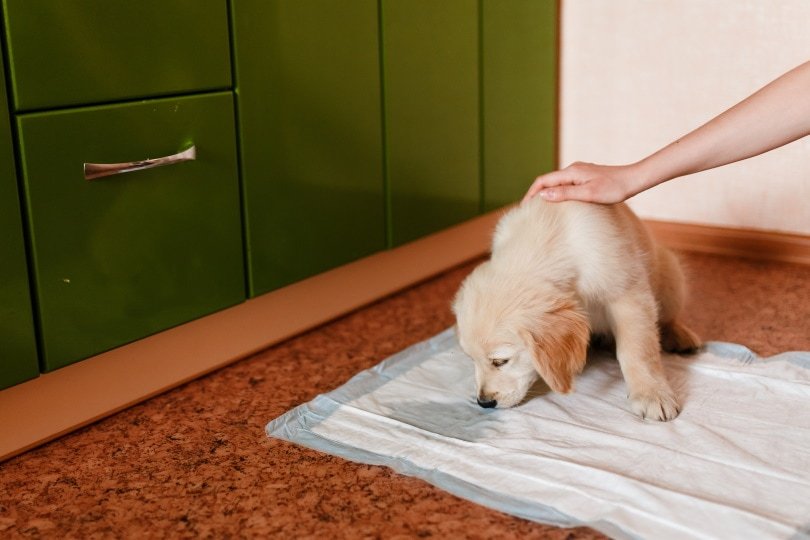
This image is property of www.dogster.com.
Frequently Asked Questions
How long does it take to potty train a Golden Retriever puppy?
Most Golden Retrievers are reliably house trained within 4 to 6 months, though some may take up to 8 months. Consistency and positive reinforcement are the biggest factors influencing the timeline. Remember that every puppy is different, and progress is rarely a straight line.
What is the best way to clean up accidents indoors?
Use an enzymatic cleaner specifically designed for pet messes. These cleaners break down the proteins in urine and feces, eliminating odors that might encourage your puppy to return to the same spot. Avoid ammonia-based cleaners, as they can smell like urine to your dog and actually attract them back to the area.
Should I use potty pads for my Golden Retriever puppy?
Potty pads can be useful in certain situations like apartment living or extreme weather, but they can also confuse your puppy by teaching them that it’s acceptable to eliminate indoors. If possible, skip potty pads and train directly to outdoor elimination for the clearest communication.
My Golden Retriever puppy was doing well and is now having accidents again. What happened?
Regression is common and can be triggered by changes in routine, teething (which typically occurs between 3 and 6 months), illness, or simply the puppy testing boundaries. Go back to a stricter schedule with more frequent potty breaks, increase supervision, and rule out medical issues with your veterinarian before assuming it is a behavioral problem.
Can I potty train my Golden Retriever if I work during the day?
Yes, but you will need a plan. Arrange for a neighbor, friend, family member, or professional dog walker to let your puppy out every 2 to 3 hours during the day. Puppies under 6 months old should not be left alone for more hours than their age in months. Crate training with a reliable mid-day break schedule makes this arrangement work.