
Last updated on July 6th, 2026 at 06:14 am
Dog Allergy Symptoms: Complete Guide to Diagnosis and Treatment
Just like humans, dogs can suffer from allergies that cause discomfort and health issues. Understanding dog allergy symptoms is crucial for early detection and treatment. This comprehensive guide covers everything you need to know about identifying, diagnosing, treating, and managing your dog’s allergies so your furry friend can live a comfortable, happy life.
Disclosure: Some links on this page may be paid or affiliate links. If you buy through them, The Spencer Zoo may earn a commission at no extra cost to you.
Quick Answer: Dog Allergy Symptoms at a Glance
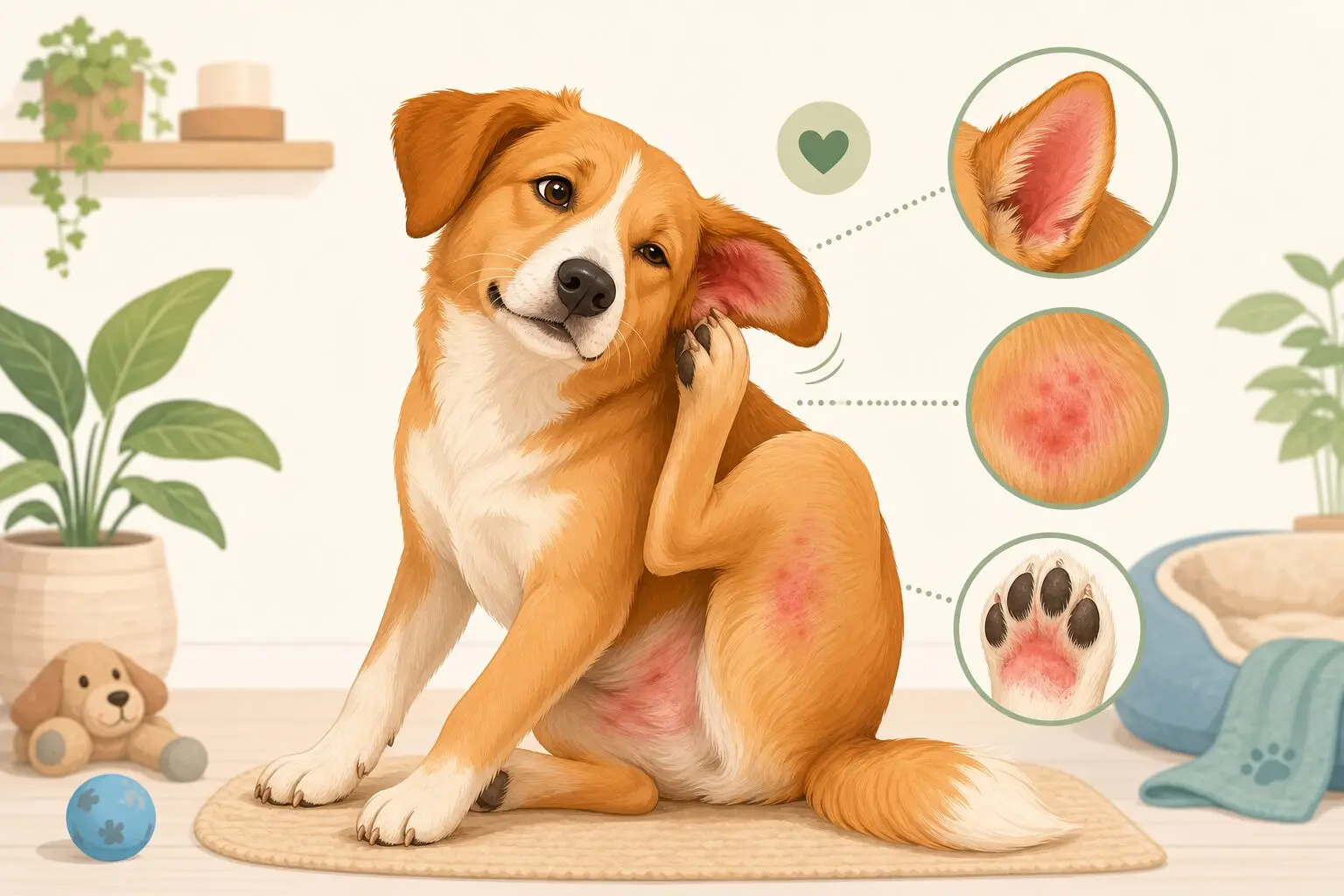
Most Common Signs: Excessive scratching, red or inflamed skin, chronic ear infections, licking paws, hair loss, and recurrent hot spots.
Most Common Triggers: Environmental allergens (pollen, mold, dust mites), food ingredients (chicken, beef, dairy, wheat), flea saliva, and contact irritants.
First Steps: If your dog shows persistent symptoms like scratching, licking, or skin redness lasting more than a few days, schedule a veterinary examination for proper diagnosis.
Common Dog Allergy Symptoms
Skin Symptoms
Skin issues are the most common sign of allergies in dogs. Watch for these indicators:
- Excessive scratching: Constant itching, especially around ears, paws, belly, and armpits
- Hot spots: Red, inflamed, moist patches of skin that appear suddenly
- Hair loss: Bald patches from persistent scratching or licking
- Flaky skin: Dry, irritated skin with visible dandruff or scaling
- Rash or hives: Raised bumps, redness, or welts on the skin
- Ear infections: Recurrent ear infections with discharge, odor, or head shaking often indicate underlying allergies
- Paw licking: Excessive licking or chewing of paws, often staining the fur pink or brown
Respiratory Symptoms
- Sneezing: Frequent sneezing fits, especially during certain seasons
- Coughing: Persistent dry cough not related to kennel cough or other infections
- Wheezing: Labored breathing or audible wheezing, particularly in brachycephalic breeds
- Runny nose: Clear or colored nasal discharge
- Watery eyes: Excessive tearing or conjunctivitis
Digestive Symptoms
- Vomiting: Recurrent vomiting, especially shortly after meals
- Diarrhea: Loose or watery stools, sometimes with mucus
- Gas: Excessive flatulence or bloating
- Loss of appetite: Refusing food, eating less, or showing disinterest in meals
- Weight loss: Unexplained weight loss despite normal eating habits
Types of Dog Allergies
1. Environmental Allergies (Atopy)
Environmental allergens include pollen from trees, grasses, and weeds, as well as mold spores, dust mites, and dander. These allergies often cause seasonal symptoms, though some dogs suffer year-round depending on the trigger. Atopy typically appears between 1-3 years of age and primarily affects the skin.
2. Food Allergies
True food allergies in dogs involve an immune response to specific ingredients. The most common food allergens are chicken, beef, dairy, eggs, wheat, and soy. Food allergies typically cause both skin problems and digestive issues. Unlike environmental allergies, food allergies do not follow a seasonal pattern.
3. Flea Allergy Dermatitis
Some dogs are allergic to flea saliva. A single flea bite can trigger intense itching and skin irritation that lasts for days. The most affected areas are the base of the tail, back legs, and belly. Year-round flea prevention is essential for these dogs.
4. Contact Allergies
Contact allergies occur when your dog’s skin touches certain materials or substances. Common triggers include certain fabrics (wool, synthetic materials), cleaning products, lawn chemicals, shampoos, and plants like poison ivy. Symptoms appear only on areas that make direct contact with the allergen.
Breeds Prone to Allergies
While any dog can develop allergies, certain breeds are genetically predisposed:
- Bulldogs (English and French) – Skin fold allergies and environmental sensitivities
- Golden Retrievers – Atopic dermatitis and food allergies
- Labrador Retrievers – Environmental and food allergies
- German Shepherds – Atopic dermatitis and contact allergies
- Pit Bulls and Staffordshire Terriers – Skin allergies and food sensitivities
- Shih Tzus and West Highland White Terriers – Atopic dermatitis
- Dachshunds – Food allergies and skin conditions
- Boxers – Environmental and food allergies
How to Diagnose Dog Allergies
Diagnosing allergies in dogs requires a systematic approach. Your veterinarian will typically follow these steps:
Veterinary Examination
Your vet will perform a thorough physical examination, review your dog’s medical history, and ask about symptom patterns. They may check for external parasites, skin infections, and other conditions that mimic allergy symptoms.
Allergy Testing Methods
- Intradermal skin testing: Small amounts of allergens are injected under the skin to observe reactions. This is the gold standard for environmental allergy testing.
- Blood testing (serum IgE test): Measures antibody levels in the blood to identify specific environmental allergens. Less invasive than skin testing but may be slightly less accurate.
- Elimination diet: The most reliable method for diagnosing food allergies. Your dog eats a novel protein and carbohydrate source for 8-12 weeks, then potential allergens are reintroduced one at a time.
Treatment Options
Medications
- Antihistamines: Over-the-counter options like Benadryl (diphenhydramine), Zyrtec (cetirizine), or Claritin (loratadine) can help mild allergies. Always consult your vet for proper dosing.
- Prescription medications: Apoquel (oclacitinib) and Cytopoint injections provide fast relief for moderate to severe allergic itching.
- Steroids: Prednisone or other corticosteroids for short-term relief during severe flare-ups. Long-term use has significant side effects.
- Topical treatments: Medicated shampoos, sprays, and wipes can soothe irritated skin and treat secondary infections.
Immunotherapy
Allergy shots (subcutaneous immunotherapy) or under-the-tongue drops (sublingual immunotherapy) can desensitize your dog to specific allergens over time. This treatment is highly effective for environmental allergies but requires patience, as results typically take 6-12 months.
Natural Remedies and Supportive Care
- Omega-3 fatty acid supplements: Help reduce inflammation and improve skin health
- Oatmeal baths: Soothe irritated, itchy skin
- Coconut oil: Moisturizes dry skin when applied topically
- Apple cider vinegar rinse: Diluted rinse can help relieve itching and restore skin pH
- Probiotics: Support gut health and may reduce allergic responses
Home Care and Prevention Tips
- Wipe paws after walks: Remove pollen and outdoor allergens with a damp cloth or paw wipes
- Bathe regularly: Use hypoallergenic, oatmeal-based shampoos to remove allergens from the coat
- Wash bedding weekly: Use fragrance-free, hypoallergenic detergent on your dog’s bedding
- Use flea prevention year-round: Even in colder months, flea allergy dermatitis requires consistent prevention
- Maintain a clean home: Vacuum frequently with a HEPA filter, use air purifiers, and reduce dust and mold
- Feed a high-quality diet: Proper nutrition supports skin health and immune function
- Consider a humidifier: Adding moisture to the air can help dogs with dry, itchy skin
Seasonal Allergy Guide for Dogs
| Season | Common Allergens | Symptoms to Watch |
|---|---|---|
| Spring | Tree pollen, grass pollen, mold | Sneezing, itchy skin, paw licking |
| Summer | Grass pollen, weed pollen, insect bites | Hot spots, ear infections, hives |
| Fall | Ragweed, mold from fallen leaves | Runny eyes, scratching, respiratory issues |
| Winter | Dust mites, indoor mold, dry air | Dry flaky skin, dandruff, persistent itching |
When to See a Vet
Consult your veterinarian if your dog shows any of these signs:
- Persistent allergy symptoms lasting more than a few days
- Open sores, hot spots, or signs of skin infection (pus, odor, crusting)
- Chronic ear infections or head shaking
- Weight loss or significant changes in appetite
- Lethargy or behavioral changes
- Severe itching that disrupts sleep or daily activities
- Vomiting or diarrhea lasting more than 24 hours
Early intervention prevents secondary infections and provides faster relief. Your veterinarian can develop a tailored treatment plan that addresses your dog’s specific allergies and lifestyle.
Frequently Asked Questions
Can dogs develop allergies later in life?
Yes, dogs can develop allergies at any age. Environmental allergies often appear between 1-3 years old, but food allergies can develop even in senior dogs. Allergies can also worsen or improve over time.
Are certain breeds more prone to allergies?
Yes, breeds like Bulldogs, Golden Retrievers, Labrador Retrievers, German Shepherds, Pit Bulls, and West Highland White Terriers are more susceptible to allergies. However, any breed can develop allergies.
How long do allergy symptoms last?
With proper treatment, symptoms can improve within days to weeks. Environmental allergies may require ongoing management during trigger seasons. Food allergies typically resolve within weeks of removing the offending ingredient.
Can I give my dog Benadryl for allergies?
Benadryl (diphenhydramine) can be used for mild allergies, but always consult your veterinarian for the correct dosage. The typical dose is 1 mg per pound of body weight, given 2-3 times daily. Some dogs may experience drowsiness.
What is the difference between food allergy and food intolerance?
A food allergy involves an immune system response, while food intolerance is a digestive issue without immune involvement. Food allergies often cause skin symptoms in addition to digestive issues, while intolerances primarily cause vomiting, diarrhea, and gas.
Conclusion
Recognizing dog allergy symptoms early is key to helping your pet feel comfortable and preventing secondary health issues. Whether your dog suffers from environmental, food, flea, or contact allergies, effective treatments are available. Work closely with your veterinarian to identify triggers and develop a treatment plan tailored to your dog’s specific needs. With proper management, most allergic dogs can live happy, comfortable lives.
Related Articles
- Dog Ear Wipes Compared: TrueBlue vs Otic vs PetMD
- Top 5 Dog Ear & Face Wipes Reviewed
- Best Dog Ear & Medicated Wipes: 5-Product Review
- Best Dog Food 2026: Top 10 Brands Reviewed
- Pet Insurance Comparison 2026: Is It Worth It?
Disclaimer: This article is for educational purposes only and does not constitute veterinary advice. Always consult a licensed veterinarian for diagnosis and treatment of your pet’s health conditions.